“Harlots, Whores, and Hackabouts”: Sex Work is Older Than the Rules we Make About It
There’s something strangely comforting about reading the history of sex work and realizing that, for thousands of years, people have been having essentially the same arguments about it.
Who counts as respectable? Who counts as a whore? Who is selling sex because she wants to, who is being coerced, who is merely poor, who is dangerous, who is desirable, who deserves protection, and who deserves punishment?
We like to imagine that our anxieties about sex work are uniquely modern. They aren't. Harlots, Whores, and Hackabouts: A history of Sex for Sale by Kate Lister is a useful reminder that the categories surrounding prostitution have been with us for an extraordinarily long time—and that we've been remarkably bad at making them behave.
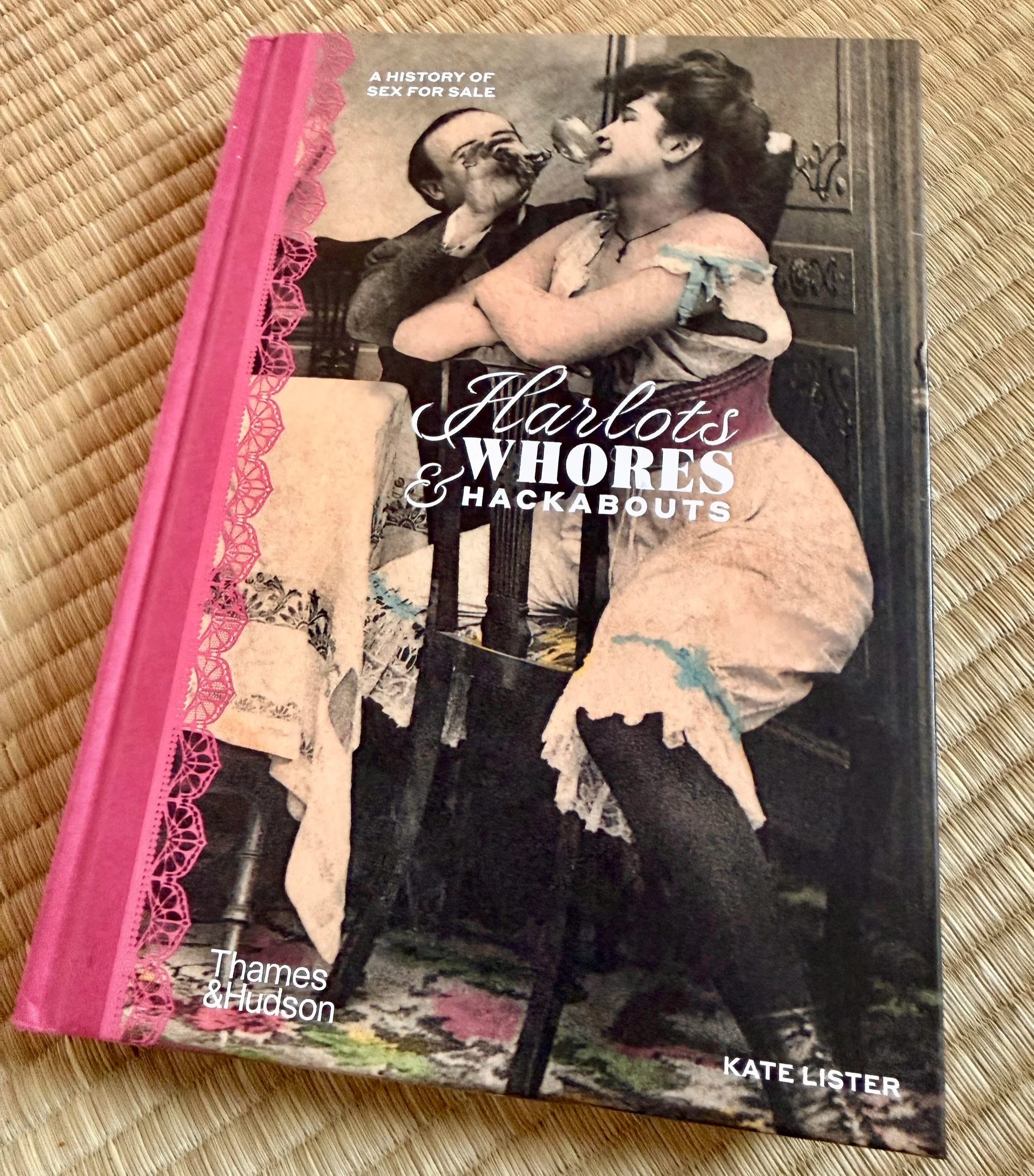
The cover design, by the way, is brilliant. The book feels good to read.
The archetypes are ancient: the respectable woman, the courtesan, the street prostitute, the mistress, the concubine, the brothel worker, the sexually available slave, the entertainer whose services blur the boundary between companionship and sex. The names change from culture to culture. The sorting mechanism remains.
Reading this as someone who works in the modern sex industry creates a particular kind of historical vertigo. My work can feel intensely modern—phones, online platforms, digital content, niche communities, increasingly elaborate conversations about consent and boundaries—and yet the fundamental human exchange is recognizable across centuries.
One of the things the book makes clear is that sex work has always performed social functions far more complicated than the transaction of sexual access suggests. It can provide companionship, entertainment, intimacy, status, fantasy, emotional release, and social connection. In some historical contexts, sex workers occupied spaces where otherwise rigid social boundaries became temporarily porous, serving as confidantes, companions, entertainers, or intermediaries between social worlds.
Of course, sex itself has never been solely about sex.
Human beings use eroticism to negotiate loneliness, power, identity, status, affection, curiosity, validation, and belonging. We build elaborate cultural systems around those needs and then act surprised when people find ways to make a living meeting them.
And then, inevitably, we try to regulate the whole thing.
This is perhaps the most familiar historical pattern in the book. Sex work becomes visible; authorities become uncomfortable; laws are created to control it; the industry adapts around those laws; enforcement creates new problems; and eventually the regulations are revised, expanded, repealed, or replaced with another attempt to accomplish essentially the same impossible task.
The specifics vary enormously across time and place, but the fundamental problem remains: legislation can change the conditions under which sex work happens. It cannot legislate away demand, nor can it eliminate the economic and social circumstances that make the work possible.
Apparently civilization has yet to find a law capable of changing that.
This doesn't mean regulation is inherently useless, or that every historical system of sex work was benign. The history is full of exploitation, coercion, violence, trafficking, poverty, and profoundly unequal power structures. Those things deserve to be taken seriously.
But there is an important distinction between addressing harm and attempting to eradicate an entire category of human behavior. Historically, those projects have been remarkably easy to confuse.
What I found most compelling about Harlots, Whores, and Hackabouts is the way it makes that confusion visible. “Prostitute” has never really been a single category. It has always encompassed people with wildly different circumstances, motivations, relationships to their work, and degrees of agency. The wealthy courtesan is not the same as the desperate street worker. The person who experiences sex work as empowering is not the same as the person who experiences it as exploitation.
Yet we repeatedly try to collapse these experiences into one category and construct a single moral or legal response.
History suggests that this doesn't work particularly well.
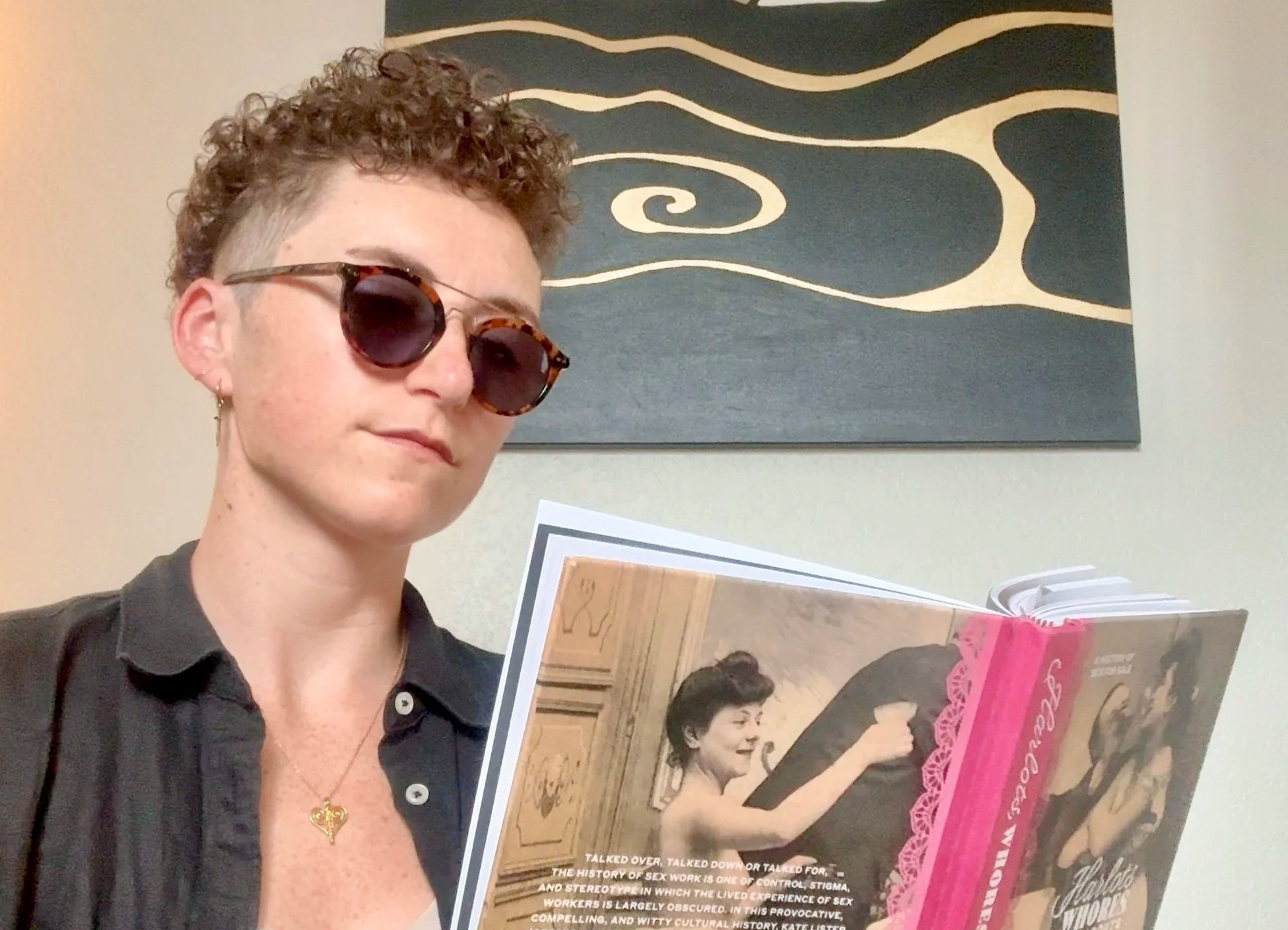
Rainy day? Whore-story!
There is something deeply reassuring about discovering that I am not participating in some bizarre modern aberration. I am participating in a human practice that has existed in countless forms for as long as people have had bodies, desires, and uneven access to resources.
That doesn't make every manifestation of sex work good. It doesn't make every experience voluntary. It doesn't erase the very real harms that can occur within the industry.
But it does make the historical impulse to treat sex work as an alien intrusion into an otherwise orderly society increasingly difficult to defend.
Sex work isn't an exception to human history. It’s central to human history.
And perhaps that's the most enduring lesson of Harlots, Whores, and Hackabouts: we've spent thousands of years trying to decide which kinds of sexual labor are acceptable, which workers are respectable, and which desires deserve punishment.
We keep changing the names.
We keep changing the rules.
And yet people keep finding ways to have sex, seek companionship, exchange money, negotiate desire, and make lives for themselves anyway.
…Maybe the problem was never quite where we thought it was.